
Documented Wheaton Directory Collections
Wheaton has no city clerk, so its historical directory trail spreads across state, federal, and library shelves. The strongest named lead is the Maryland State Archives listing for the 1968 Kensington/Takoma Park/Wheaton Directory. That volume is one Wheaton-era clue. It is not proof of a complete annual run. Add the Library of Congress guide to suburban criss-cross volumes and the Montgomery County real-estate supplement. Each source covers different years and formats. Write the year and repository beside each address.
| Collection | Years | Where Held | Access |
|---|---|---|---|
| Kensington/Takoma Park/Wheaton Directory, BRG29-10-65 | 1968 | Maryland State Archives | Catalogued archival holding; confirm consultation route |
| Washington/Maryland/Virginia suburban criss-cross directories | 1968-1996, with gaps | Library of Congress guide | Check the guide and repository holdings before a visit |
| Montgomery County Real Estate Directory supplement | 1951 | Library of Congress guide | Historical address lead; verify the volume's access details |
| Wheaton-area newspapers | 1956-1987, title dependent | Maryland State Archives and local repositories | Repository-specific microfilm and reading access |
Gaps deserve attention, not conclusions. The Library of Congress guide names missing suburban criss-cross years. A catalog record, meanwhile, only proves that a repository describes a volume. Treat a missing year, or a name absent from one edition, as a prompt to check a nearby year and a second source. Absence from a single book proves little. It may only show that the book fell short.
Note: Record the printed community label exactly. Wheaton, Silver Spring, Kensington, and Takoma Park appear differently across collections.
Wheaton Directory Research Stops
Wheaton Library offers public computers and printing. A branch page, though, is no proof that every directory volume sits on its shelves. For deeper work, Montgomery History's Sween Research Library in Rockville holds local abstracts, vertical files, photographs, newspapers, manuscripts, maps, yearbooks, and church and community records. Its PastPerfect catalog lists people, properties, organizations, photographs, and objects. Search it before a visit or a copy request.
The two stops do different jobs. A library search surfaces tools and community context. Sween materials bring deeds, wills, family papers, old photographs, newspaper runs, and abstracts alongside a Wheaton directory result. That pairing matters when an address shows up once in a directory but needs a second date or a firmer link to a parcel. The Wheaton Library branch page marks the local public access point. Confirm access rules before you go.
Treat the branch as a launch point. Then confirm the exact repository and any access restriction for the item you need.
Wheaton Directory Year Runs
Two layers anchor Wheaton's address history. One is the 1968 Kensington/Takoma Park/Wheaton Directory. The other is a 1951 real-estate supplement. The suburban criss-cross series then stretches the address hunt from 1968 through 1996. It has documented gaps along the way. Compare that with today's parcel data, which answers what a record shows now. Directories, maps, insurance policies, and newspapers better capture an earlier date. They show what an address or label said back then. The Maryland State Archives' Wheaton directory holding identifies the 1968 volume and adjacent directory records.
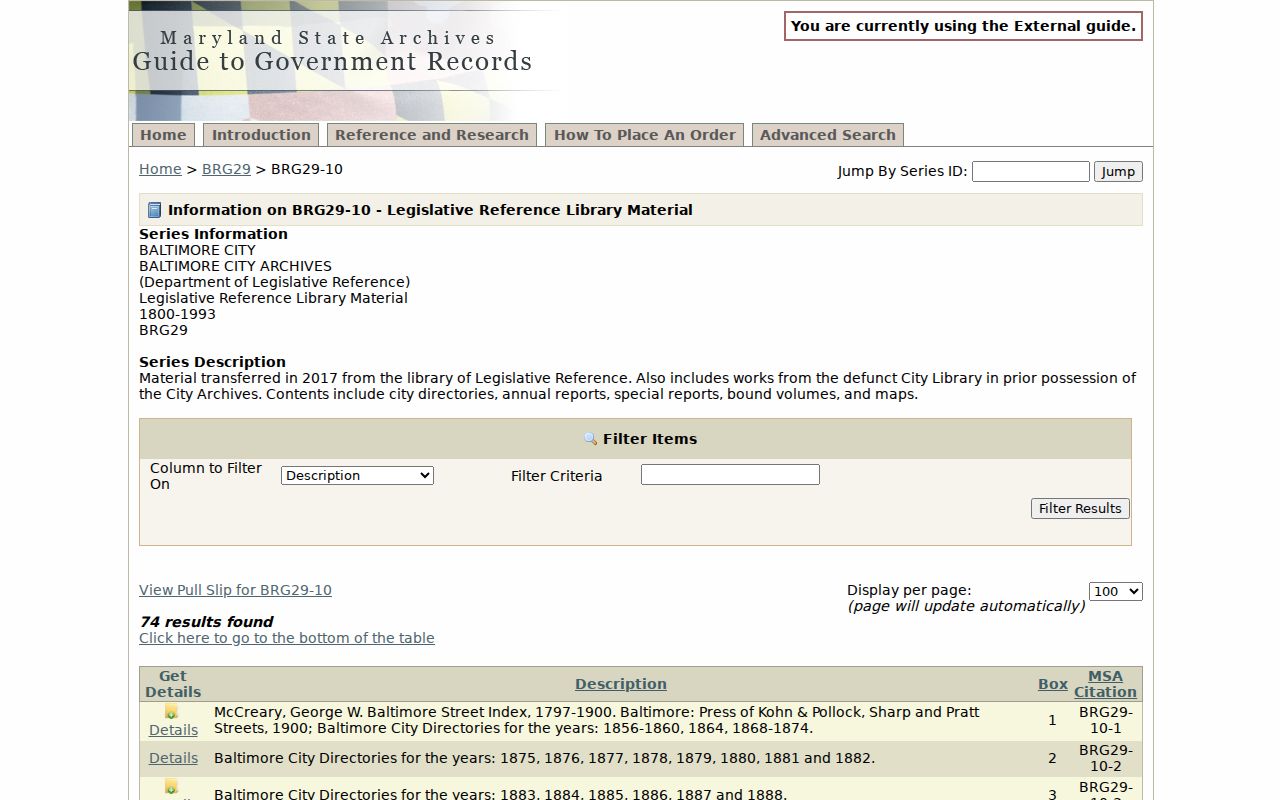
The 1968 holding is a year marker. It is not proof that every Wheaton household appeared in the volume, so a simple timeline keeps the layers clear:
- 1951: The Montgomery County real-estate directory supplement supplies an earlier address reference.
- 1968: The Kensington/Takoma Park/Wheaton Directory is listed in BRG29-10-65.
- 1968-1996: Suburban criss-cross holdings provide later address-oriented volumes, with identified gaps.
Reading Wheaton Directory Entries
A directory result should be copied exactly as printed. Resist filling in what the volume left out. Entries can carry a person or business name, an address, and sometimes an occupation, telephone number, or business classification. The field order, household wording, owner marks, and abbreviations all varied by publisher. None of that can be assumed from a distance. Verify each detail in the actual volume before treating it as fact.
| Name | Copy the name and spelling exactly as printed, including initials or business form. |
|---|---|
| Address | Preserve the full street string and community label before comparing it with a current address. |
| Classification | Note any occupation, telephone, or business category only if the volume actually displays it. |
| Date and source | Log the directory year, page or image, repository, and a search date. |
- Criss-cross directory
- An address-oriented directory arranged to help find an entry from a street or number instead of beginning with a name.
- Householder index
- An index intended to point from a household name to an address or entry; verify its exact arrangement in the volume.
- Abbreviation key
- A printed explanation of shortened labels or marks. Photograph or transcribe the key before interpreting an abbreviation.
Keep the original wording first. A later map, parcel record, or newspaper may explain a changed label, but it should never silently replace the printed form.
Wheaton Directory Address Labels
Old address work needs a slow bridge from a directory string to a modern parcel. Start with the old spelling. Search it in the directory and in old newspapers. Then compare the result with a period map or atlas, a parcel's legal description, and a deed reference. Montgomery Planning's address-assignment material says a current letter can confirm a new or revised number or street name. No Wheaton-wide renumbering event appears in that material. Never change an old entry without evidence.
Wheaton also sits inside a broader Montgomery County records system. A postal city line or a planning boundary is not a separate municipal record custodian. Keep three columns: the directory label, a later map label, and the current premise address. That habit keeps records from different eras apart.
Wheaton Directory Map Bridges
Maps give a Wheaton residents directory entry its geography. Montgomery History lists several that pair well with directory years. The 1794 Griffith map is the earliest. The 1865 Martenet & Bond property-owner map names landholders directly. Klinge Real Estate Atlases run from 1931 to 1959. Selected Sanborn material, county aerials, and tax maps round out the set. Klinge volumes can show owner names, subdivisions, liber and folio references, and building footprints. Coverage has limits, though. Treat any map as context rather than a deed. Montgomery History's maps and atlases page identifies the historical map resources available for this kind of comparison. Its aerial holdings support the same work.
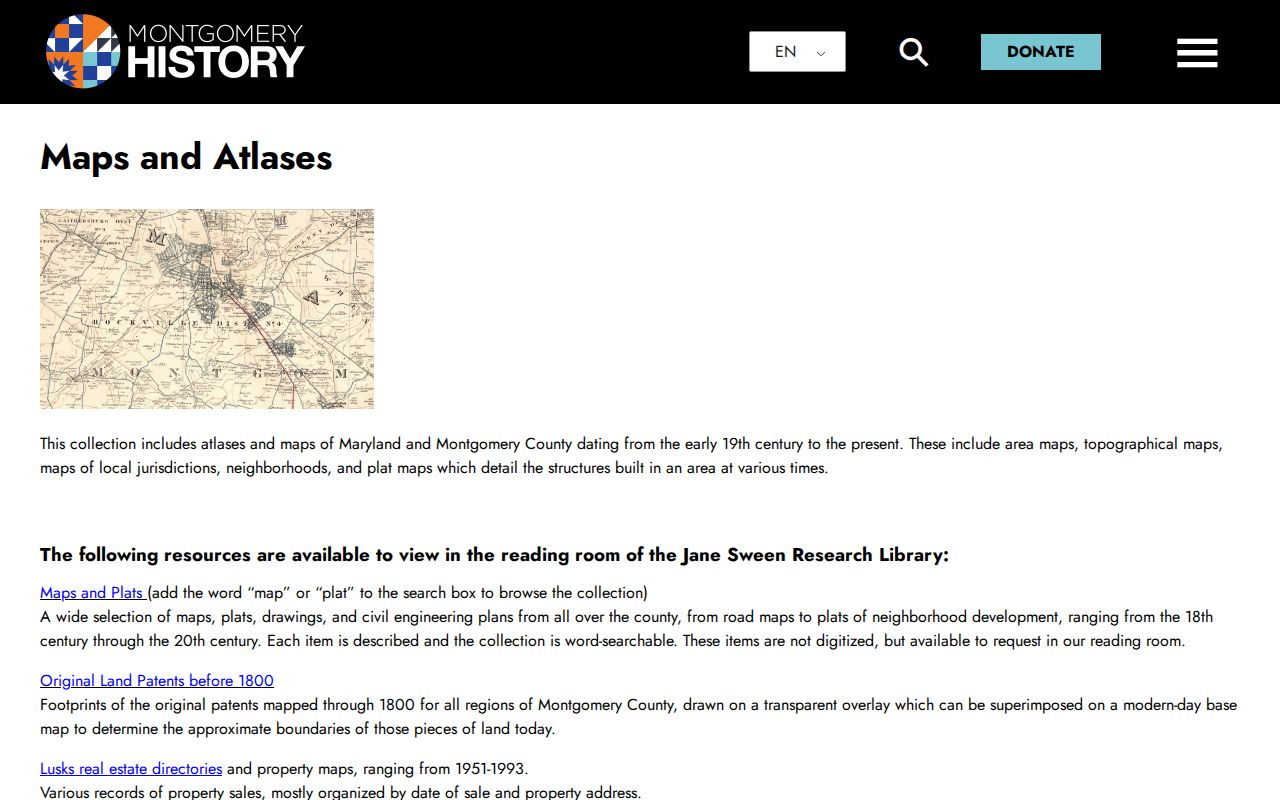
Match the map's date, scale, and coverage against the directory year before comparing anything. A 1931 atlas, a 1951 aerial, and a current parcel polygon can all be accurate while describing different boundaries.
Wheaton Newspapers Beside Directories
Newspapers supply dated leads. A directory run may have a gap. An address may also show up under another spelling. Wheaton-area titles include Wheaton News, Wheaton Record, Journal, and Suburban Record. The Suburban Record ran from 1957 through 1987. Access still depends on the repository and its microfilm restrictions. Confirm the holding institution before planning travel or an interlibrary request.
Search a known street string, an organization, a business, or a public-notice date. Record the title, date, page, and repository. Note whether the hit is an advertisement, civic notice, school item, legal notice, or personal name. That trail helps later researchers. It separates an address lead from real evidence of a household connection.
Montgomery County Sentinel coverage adds another dated layer. Digitized issues run from 1855 through 1963 on Maryland Digital Newspapers and Chronicling America. Issues from 1964 through 1969 sit on reading-room computers. Material from 1970 through 2020 is on microfilm at Rockville Memorial Library. Montgomery History holds Sentinel microfilm from 1855 through 1969 plus published genealogy abstracts. These paths are collection-specific. A directory search log should always name the title and format used.
Montgomery History's property resources explain another approach. A directory, map, insurance policy, deed, and parcel card can be compared. No single item should be treated as conclusive. Montgomery History's property-research page sets out the historical-house research approach.
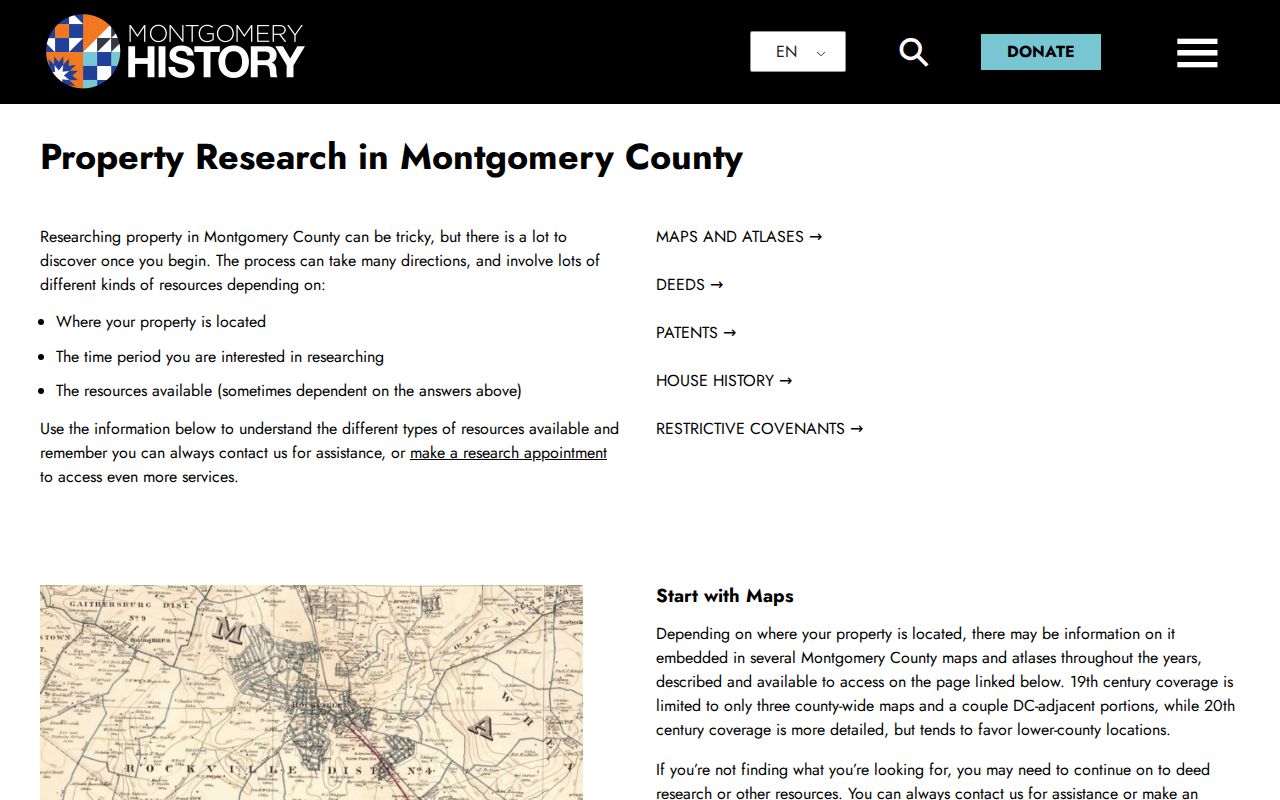
Let the surrounding sources test a directory lead. A single name match should never become a claim about residence or ownership on its own.
Note: A repository restriction or a missing microfilm year is a gap to log, not a negative search result.
Tracing Wheaton Directory Households
Track a household across dates instead of forcing every source to answer one question. Begin with the nearest known directory year. Keep the original name and address exactly as printed. Then check the earlier or later volume. If a criss-cross section exists, use it to test the address. Pair those dated entries with the relevant census material, and reach for newspapers, maps, deeds, or local abstracts when a move, a changed address label, or a property transition needs investigating.
- Locate the nearest known Wheaton directory entry and cite its year, page, and repository.
- Search adjacent directory years, allowing for initials, spelling changes, and nearby community labels.
- Use the criss-cross volume, if present, as an address check rather than assuming it covers every year.
- Pair the dated address with available census, newspaper, map, or abstract evidence.
- Record each unresolved link instead of guessing whether a move, death, omission, or name change caused a disappearance.
Montgomery History's local abstracts reach across wills, marriages, land records, tax assessments, census material, mutual fire insurance policies, and cemetery cards. They work well as companions for family or property history. When a directory finding needs a current official record, a Wheaton resident lookup can help. Keep the historical entry dated and distinct, though.
Wheaton Directory Gaps
One verification gap matters most. No official sample page for the 1968 Wheaton directory is available. Never infer an abbreviation key, entry sequence, relationship wording, or owner notation from a different directory. Verify it in the specific volume. Selected Sanborn coverage deserves the same caution. No official Wheaton-specific sheet or year run is published.
Montgomery History built its local abstracts partly to preserve research leads against record loss. Finding aids stay valuable even where a modern image exists. An abstract never replaces the underlying instrument, though. Keep the source, date, page or image beside every Wheaton directory result. Note any unresolved issue there too.